
haymanut kasau
i know i said this blog would focus on my media consumption but i need to write this somewhere

I’ve reported on quite a few protests over the past two years. I got my start covering the tail end of the anti-overhaul demonstrations, and after October 7, was assigned to countless hostage rallies, which have experienced a slight resurgence since Israel started bombing Gaza again.
I used to derive satisfaction from tracing the families’ sharpening rhetoric against Bibi while picking apart their speeches at Saturday night hostage rallies, but it’s become tiring at this point. Netanyahu pulled the curtain back on his true intentions a while ago. He and his government are clearly bent on destroying Gaza. What more is there to say?
I have even less tolerance for the anti-government protests, especially those run by Tel Avivians. I’ve seen my fair share of the Tel Aviv crowd, since they often gather for demonstrations outside the Knesset or Bibi’s multiple homes on Azza Street. They arrive to Jerusalem by foot in these massive marches along Begin Highway, entering the city in melodramatic fashion as giant loudspeakers attached to a van blast Hadag Nahash’s “Zman LeHitorer.”
Last week, my annoyance with the Tel Aviv anti-government types peaked during one of their demonstrations outside the Knesset, which just so happened to be taking place at the same time as a smaller protest — probably some one hundred people — over the disappearance of a nine-year-old Ethiopian girl.
Haymanut Kasau went missing from her home in a Jewish Agency-run absorption center in Safed over a year ago on February 25, 2024. Law enforcement never solved the case, which Kasau’s family believes is due to police’s willful negligence toward the Ethiopian community.
“Haymanut wasn’t the right skin color!” protest organizer Avi Yitzhak shouted as protesters marched down the road to the Knesset, demanding the police recategorize her case as a kidnapping rather than disappearance — “If she had simply disappeared, they would have found her within a week or two.”
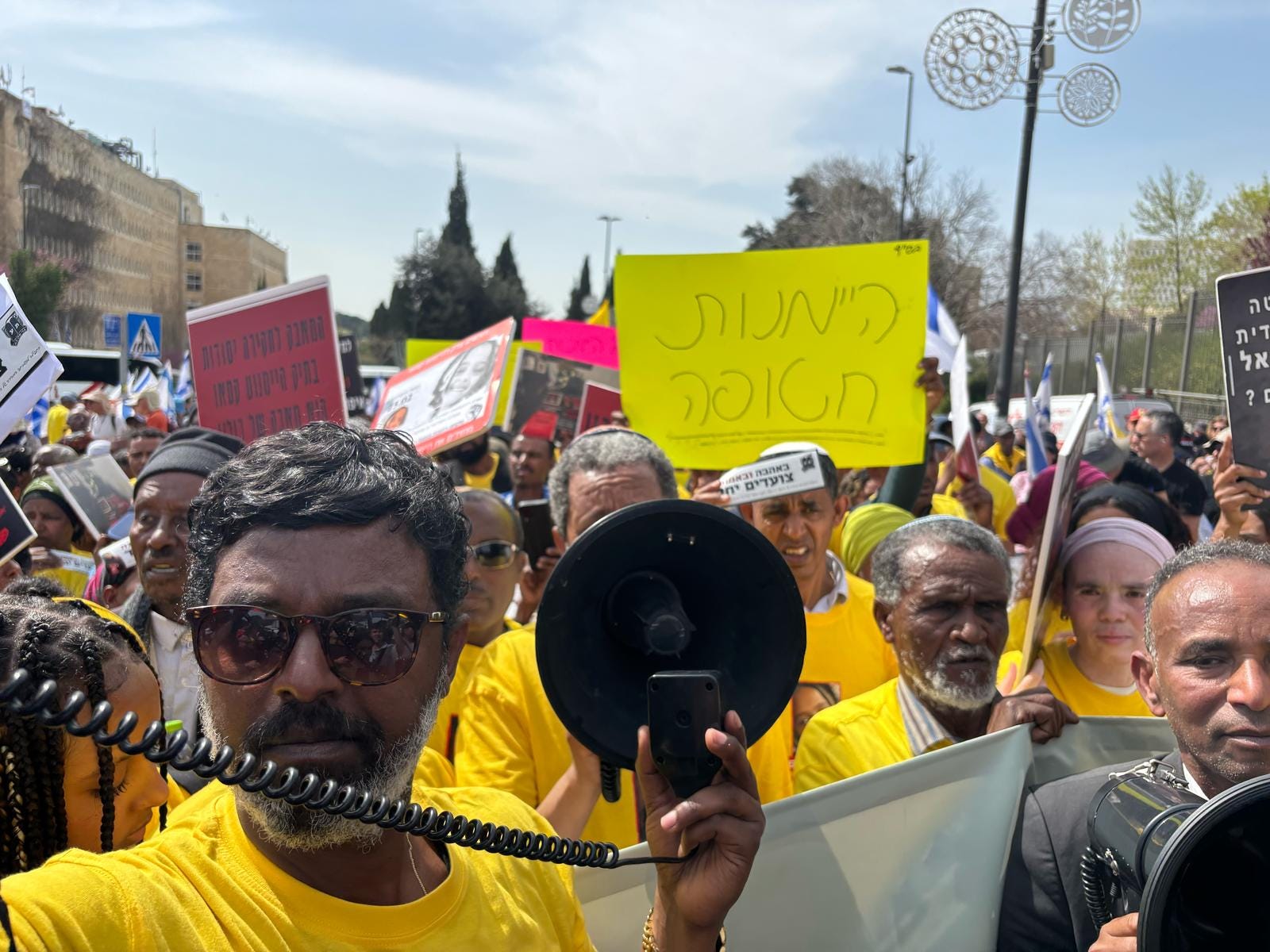
As far as I can remember, the Ethiopian demonstration marked the first time I had seen members of a Jewish subethnic group protest clear discrimination by state authorities. It lacked any ideological orientation and was purely ethnic, with Religious Zionism MK Moshe Salomon and National Unity MK (Gantz’s party) Pnina Tamano-Shata giving back-to-back speeches.
The protest was, however, critical of the police, Shin Bet and Jewish Agency, since it accused them, and the state of Israel more generally, of racism.
My absolute certainty that I had never before seen anything like the Haymanut protest was cemented by the familiar crowd of anti-government protesters, who seemed increasingly on edge as the Ethiopian protesters and their allies neared the Knesset building. By the time they reached the entrance to the complex, Yitzhak began a long speech. He then passed off the megaphone to Kasau’s father, giving protesters plenty of time to mingle with each other.
Some of the anti-government demonstrators were receptive, listening to the speeches, joining their chants (‘Where is Haymanut? Haymanut was kidnapped!’) — but their leadership was certainly not.
It was actually quite amusing to watch as the prominent Tel Aviv activist Moshe Radman scrambled to regain control over the situation.
He began by trying to approach protesters, hesitant with a furrowed brow, nodding along to their conversation. But I suppose he must have lost his patience at some point, because during the father’s speech, he began to chant with several others: “One bloc, together we will win!”
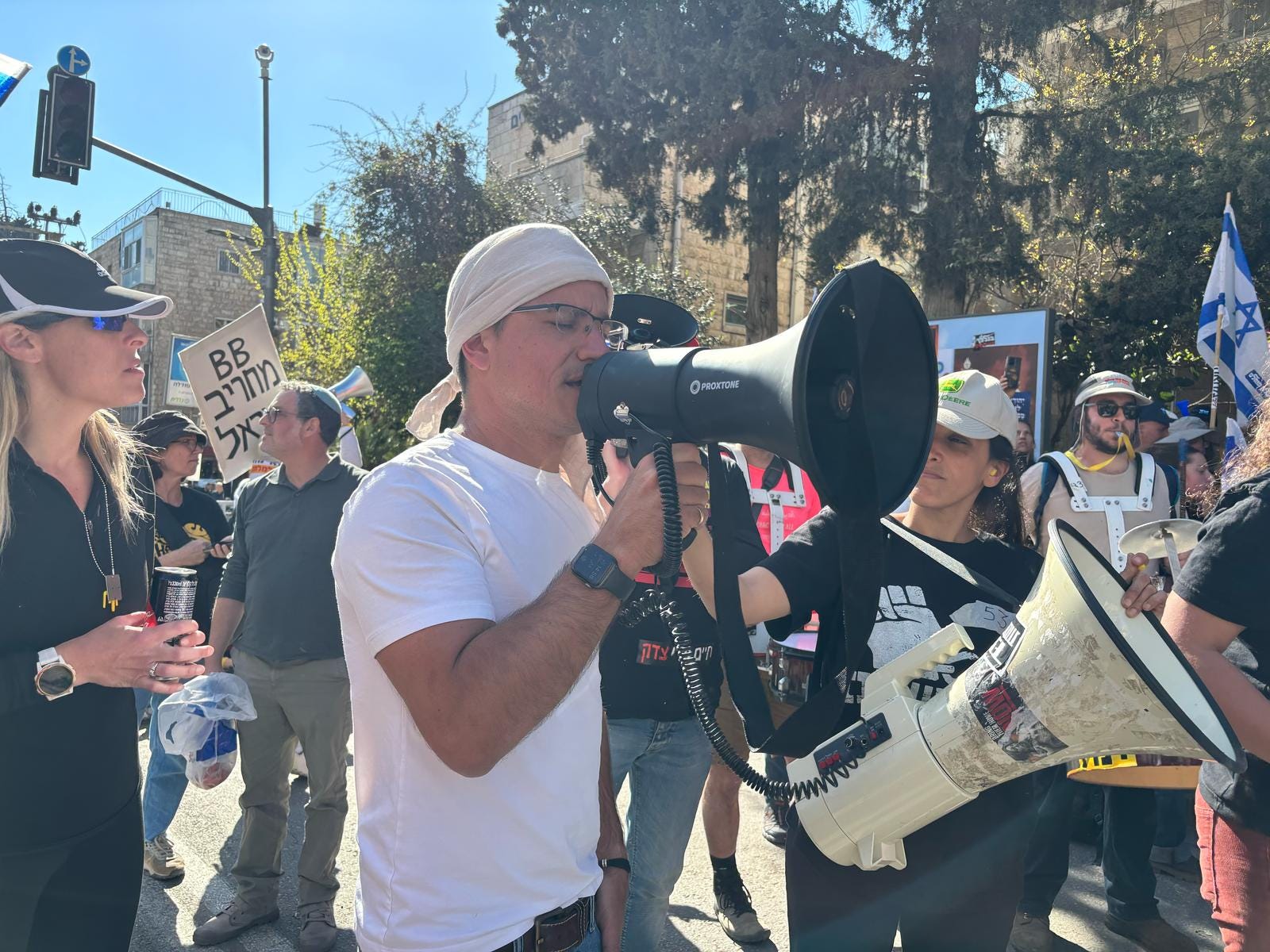
Maybe it’s naive, but I had really thought that the stifling of intra-Jewish ethnic friction through appeals to national unity was a relic of the (not-so-distant) past. Given the sorts of people leading the Tel Aviv protest, I suppose it shouldn’t have been so shocking.
The split second of chanting brought to the front of my mind a point made by the Mizrahi feminist scholar Henriette Dahan Kalev, who differentiated between “legitimate” and “illegitimate” protests in Israel.
For a protest to be “legitimate,” it must have clear demands that do not run up directly against the state’s legitimacy, nor question the notion of Israel as a “homogenous Jewish nation-state” — Zionism is the norm in Israel, that’s not new.
Less obvious, however, is Kalev’s notion that in order to retain legitimacy, a protest must be presented as for the sake of Israeli society as a whole, rather than a specific sector. When they aren’t, it’s easy for Israel’s national elite to delegitimize such a protest as “sectarian.”
This is how Israel’s ruling class smeared the Black Panthers in the 1970s, eventually wearing down the radical protest group and later stealing their social agenda, tweaking it in order to build up the Likud as a popular movement.
Any Palestinian demonstration is of course precluded from legitimacy in Kalev’s framework, but her criteria for illegitimate protests also apply to protests that don’t relate directly to the twin questions of Zionism and Palestinian nationalism, such as Haredi anti-draft protests.
Organizers at the Kasau protest were toeing a very fine line. They accused Israel’s state agencies of anti-Ethiopian racism while wearing bright yellow shirts in solidarity with the Gaza hostages — as in, trying to appeal to Israeli unity through the hostages issue, while still calling for the state to deal with what could easily be branded “sectarian” interests.
If Radman’s chant was at all indicative of the crowd’s sentiments, it seems the Kasau protesters’ delicate balancing act fell flat.
ADDITIONS
1 — Sorry this is rushed, particularly at the end. It’s been in my drafts for days and I’m tired.
2 — I’m unsure of whether Kalev’s framework is entirely applicable in the Ben Gvir era, since he’s used his position at helm of the police to violently crack down on “legitimate” anti-government protests, which appeal to Zionism and appear to concern Israeli society as a whole.