war with iran
more writer's block, forugh farrokhzad, still not over jerusalem day

You’d think that the Iran front opening would have put an end to the unrelenting apathy I’ve felt over the past few months that has kept me from writing anything interesting — whether it be poetry, these posts or a mere diary entry — for pleasure.
Nevertheless, I’ve remained just as artistically impotent over the past 48 hours as I did before the entire country received a warning siren at 3AM Friday morning, declaring our surprise attack on Iran.
Just like in the wake of October 7, the entire country is blanketed in a layer of quiet. In the daytime, most shops remain closed, streets are sparse with pedestrians and people speak in muffled, distant voices. I’m not sure how much of this newfound silence reflects reality, or whether I’m just trapped in a semi-dissociative state.
The silence becomes even more conspicuous in the evenings, ahead of the Iranian missile barrages, when the presence of any living being seems like a hallucination.
Last night at around 11PM, as I stood out on the sidewalk waiting for the sirens to sound in my area, a slim, well-groomed IDF reservist spoke on the phone while exiting his parked car on the corner. A young man in a white tanktop flew by on his electric bicycle. Families in the shiny new apartment building opposite mine peeked out from their balconies to watch the interceptions. Two tussling cats scampered across the road. Then the first barrage of missiles began.
No sirens sounded as orange streaks of light arced across the sky. I stayed outside in the middle of the road, watching missiles fall north of Jerusalem. I learned soon after heading back inside that a missile struck a two-story home in the Arab city of Tamra.
After rescue services searched through the rubble, it was announced the direct hit killed a mother, her two daughters aged 13 and 20, and their cousin.
Thursday evening, before the entire country went into a state of emergency, I went to a writers’ circle organized by activists with Standing Together in hopes it would kickstart my dormant creative impulse.
We were given a prompt by the organizer to recount a time we felt our writing was limited by others’ expectations. It’s difficult as a reporter to narrow this feeling down to a specific instance — it’s more so just a perennial discomfort that I need to deal with.
I decided to write about the time that this pressure transformed into paranoia — when the English-language police spokesman confronted me about the left-wing slant of my reporting the morning of Jerusalem Day.
I know that Israeli authorities occasionally read what I write, but to be identified and chewed out before a gaggle of reporters ahead of the Flag March rattled me a bit. By the time I had resolved to write this, though, our allotted time was already up.
We spent the first half-hour of the session discussing a quote from an anonymous writer, whose identity we only learned after discussing the two lines of poetry: “They want me to write about flowers, but my voice is born in the wound.”
The excerpt is apparently from the Iranian poet Forugh Farrokhzad (b. 1934), who spent her short life skillfully weaving her private, introspective musings into poems depicting Iranian society at large. She died in a car crash in 1967.
She’s known for her subversive expressions of feminine desire and grief, in defiance of the strict patriarchal norm in Iran, which of course preceded the Islamic Republic. My knowledge of her work is pretty superficial, but I best remember her use of natural imagery (gardens, streams, flowers) to portray the horrors of modern warfare, suffocating state censorship and the like.
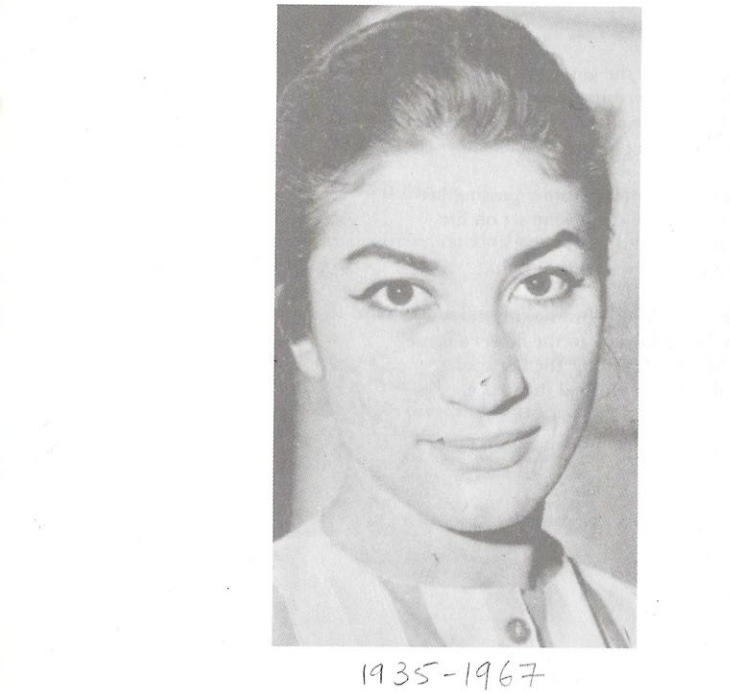
I read some of Farrokhzad’s poetry during my sophomore year of college, when I enrolled in a two-person class on modern Persian poetry. The course was taught by Navid, a soft-spoken man in his 70s who happened to be the son of the Islamic Republic’s first prime minister, Mehdi Bazargan, who resigned during the US embassy takeover.
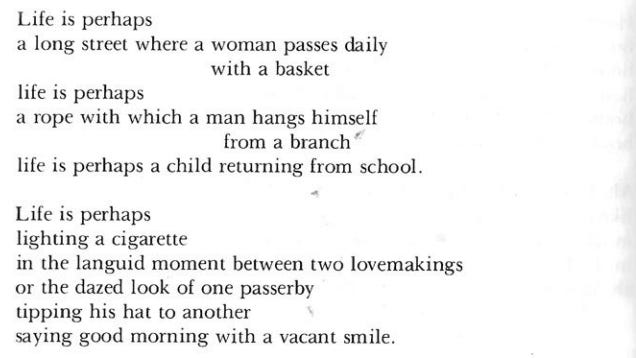
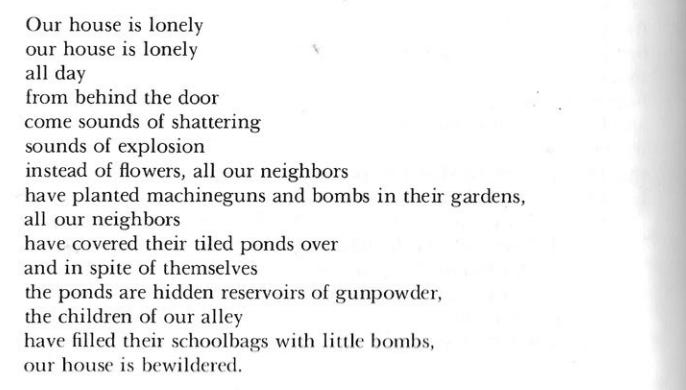
Now, I don’t remember reading these two lines in particular and don’t know from which of her poems they originate. But I will share two excerpts below that I do recall from the course, which I feel are particularly resonant over these past two days of war.