
13.10.2025
what i was up to when the ceasefire took effect

I was outside Ofer Prison the moment the last of the hostages reached Israeli territory, standing in a dirt lot where all one could see of the jail was its looming concrete walls, draped in banners emblazoned with bellicose slogans from the February truce.1
It began as a chilly, serene Monday morning but quickly warmed up, which made me regret taking the same striped sweater I wore to a February prisoner release. I rued it then, too, aimlessly pacing in the middle of the road outside the Ramallah Cultural Palace with the sun beating down on my neck. I stayed in the West Bank until nightfall that winter, awaiting the prisoners whose release was delayed by a few hours on the government’s orders. It cooled down considerably by then, I had made the right decision.
I’ll try to focus on earlier this week, though. Outside the prison alongside me were a handful of army spokeswomen near my age, a Channel 14 journalist and his cameraman, plus two Palestinian cameramen working for Al-Araby TV. We were mostly silent apart from the soldiers, who chatted nonchalantly with each other as army jeeps zipped past us towards Beitunia checkpoint.
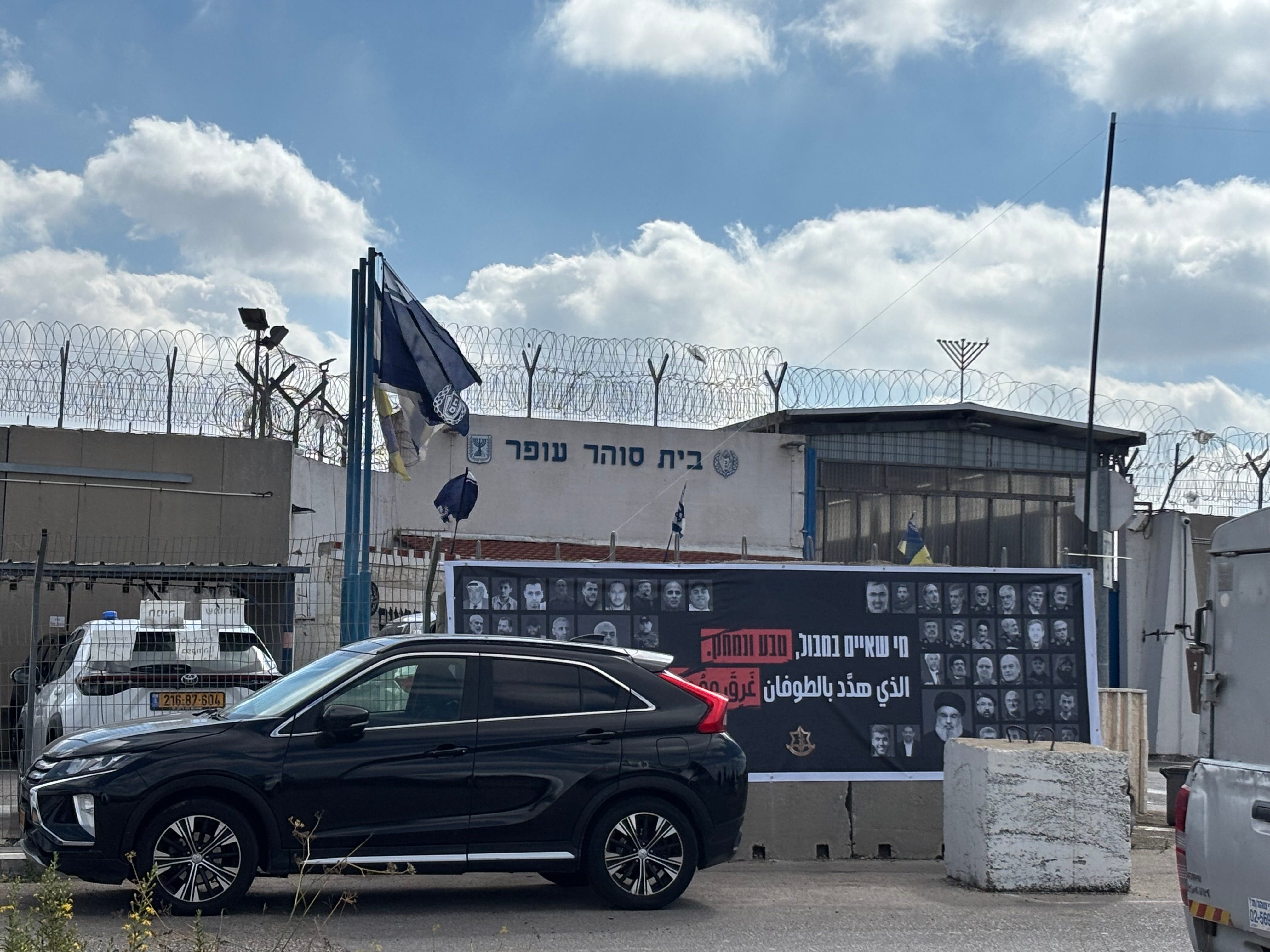
We were certain that the last thirteen hostages had been handed over to the IDF after three white buses departed the detention facility towards Ramallah.
Distant cheers from the other side of the West Bank separation barrier were quickly drowned out by the sound of stun grenade explosions. Drones overhead dropped tear gas on the Palestinians who had gathered near the checkpoint to celebrate.
The cameramen and I turned around towards the wall and took a few small steps foward, staying within the dirt lot. This angered the police at the scene, who ordered us to “stay back!” The army girls came to our defense, asking what the issue was, so long as we remained in the press enclosure.
The prisoners — 88 of the total 250 released — continued on to a Ramallah community center just two kilometers from where I stood. I realized then what a mistake I had made in choosing to remain on the Israeli side of the border, where all I could do was listen and watch soldiers and private security guards rush towards the commotion.
To make it to Ramallah, I would’ve had to hail a cab driver to take me through Qalandiya checkpoint, into the thick of Kafr Aqab’s dangerously congested thoroughfare, until reaching the outskirts of the city.
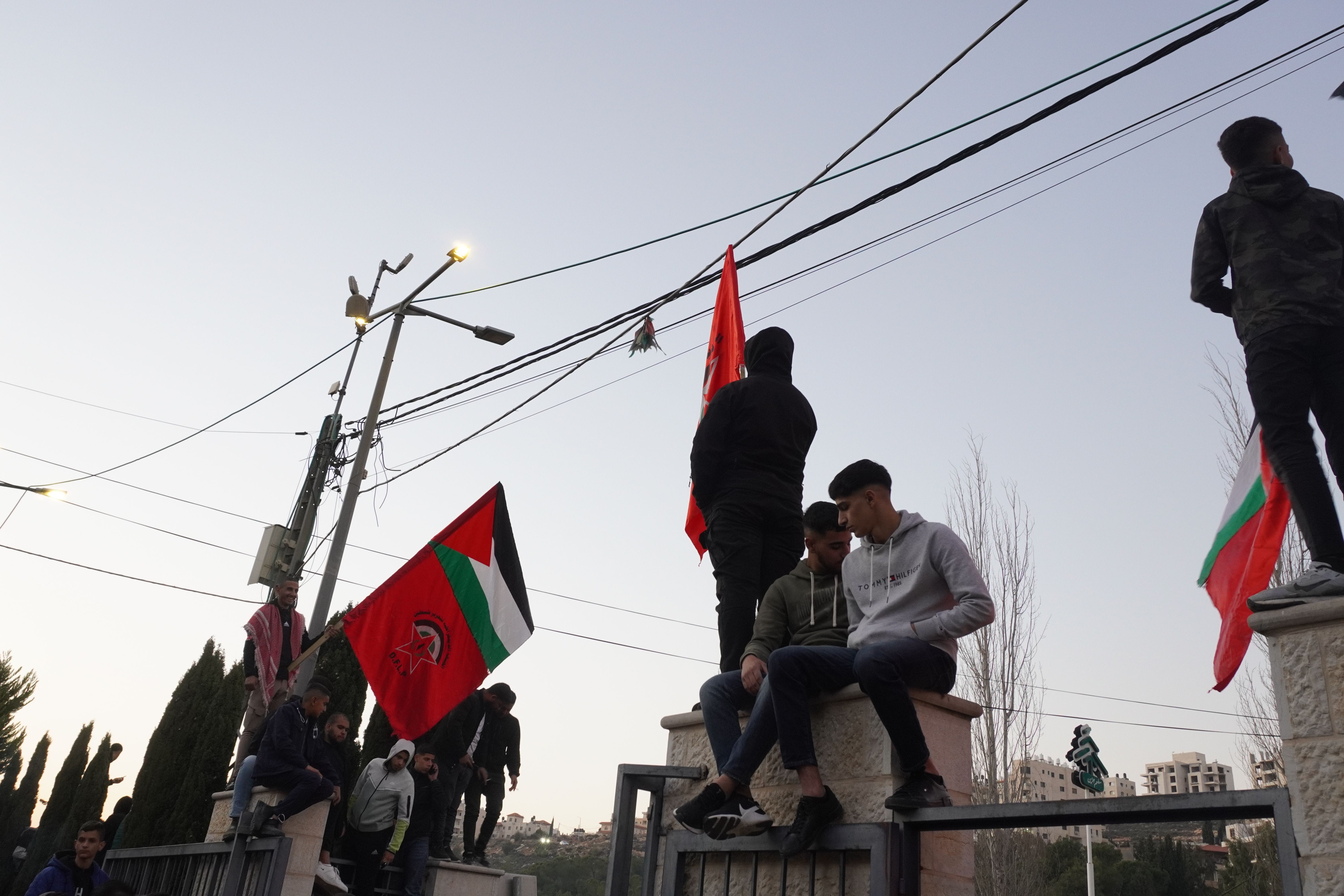
I can assume from past experience that the prisoners, once reaching Ramallah, alighted the buses in their grey tracksuits, the same color as the prison walls. They probably threw up V-signs and sailed atop revelers’ shoulders as a tearful crowd chanted “God is great.” I assume that street vendors were walking around selling juice for two shekels as teenage boys paraded around bright yellow Fatah flags or those of the DFLP, embellished with the red star.
The rest of the security prisoners were deported abroad to neighboring Arab countries or sent to East Jerusalem, where they met their families awaiting them outside the Russian Compound. Another 1,768 Gazan detainees were sent back to the enclave and received by their families in Khan Younis.
After the noise had died down outside Ofer, the Channel 14 reporter approached the police commander at the scene and received a hearty clap on the back. I stayed behind with the Arab cameramen and army spokespeople. As I prepared to leave, one of the army girls asked me: “That’s it?”
“I don’t know, you tell me,” I replied. There was nothing more to see at the prison. I walked across Route 443 and stood at the bus stop. The light turned green and cars began to speed past me on the road towards Jerusalem. I glanced to my right — a road sign pointing towards Atarot and below it a faded yellow banner: “All of them, now.”
I grew tired of waiting for the bus and ordered a taxi. The driver picked me up with his car radio crackling. First Shlomo Artzi, then The Beatles’ “Let It Be” and finally Noam Rotem’s “Help is on the Way.”
I arrived home, opened my laptop and immediately pored over the videos I had missed that morning, of hostages reuniting with their parents and siblings. I cried several times in front of the computer screen, a momentary catharsis I hadn’t been anticipating. But soon enough, everything quickly returned to as it had been these past two years.
“He who threatens a flood will drown and be wiped out”, “The eternal nation does not forget, I will pursue my enemies and overtake them”, etc.